Montana Land For Sale: Building, Commercial, Residential, Farm, Hunting, Ranch
Q2 2026 – Over 1100 Land Listings – Land Costs, Closed Sales, Days on Market
Sales Price (median)
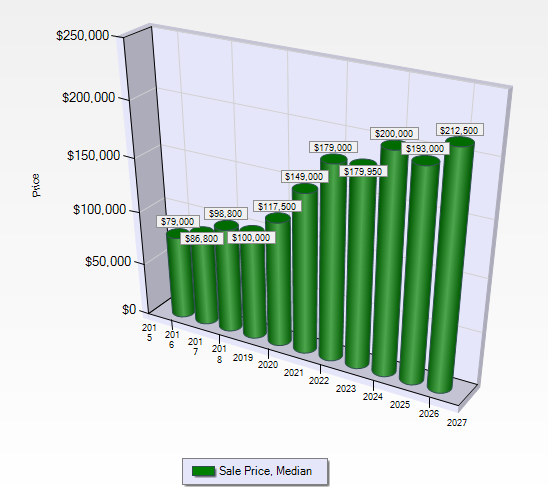
Graph 1: Q2 2026 Montana land prices came in at a median of $212,500, ⇑ $19,5000 from the 2025 price of $193,000.
One year ago, the price of land was rising from July’s median price of $185,000 toward August’s median price of $232,5000.
In the last 10 years, price has increased from the previous decade’s low, 2015 median price of $79,000 to the YTD 2026 median price of 212,5000.
The low this decade was $79,450 in May, 2020.
In the present decade, Montana’s land prices have risen ⇑ $130,150 or ⇑ 52% from the May 2020 low to the July 2024 high, from $79,000 to $275,000.
Trends: Median price for parcels of land greater than 20 acres was lowest in 2019, at$110,500 and highest in 2024, at $285,500.
Q4 2022 saw a record sales price quarter, when the median price for land over 20 acres hit an all-time high of $1,200,000.
Days on Market (median)
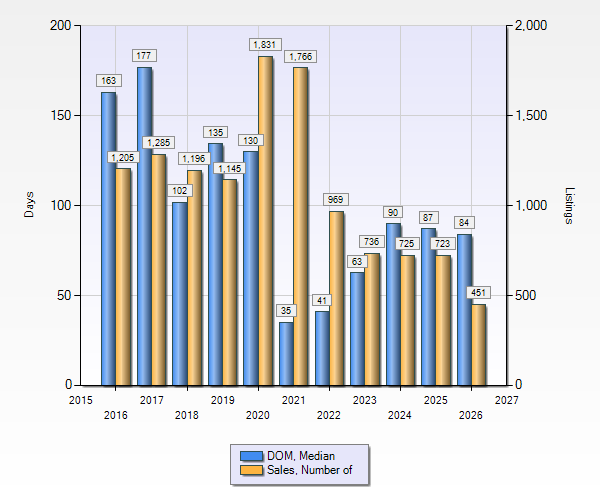
Chart 2: Days on Market are 84 in YTD 2026 and there have been 451 land sales in 2026.
Days on market has hovered around 87 for the past 3 years.
In 2022, median days on market all sizes was 41.
In 2020, median days on market for all sizes was 130.
Average days on market in October 2012 was a record high of 231.
From farming and ranching to transportation and tourism, Montana’s economic environment is dependent upon land, which is why buying Montana land is wise.
Yearly Montana Land Sales Volume
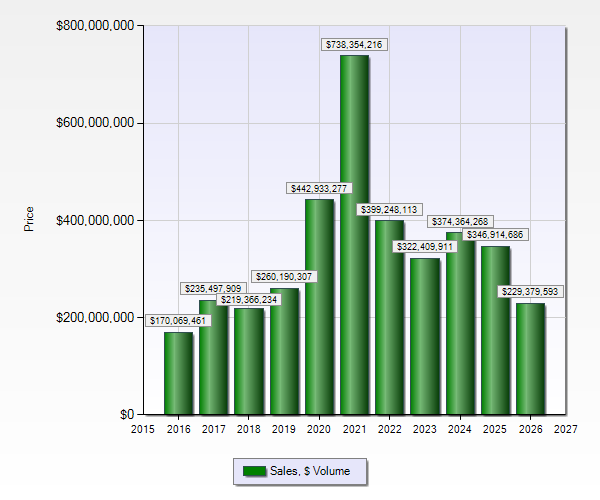
Chart 3: Sales volume by year for Montana land hit a record in the Covid year of 201, coming in at a whopping $738,354,216! The low in the past 10 years was $170,069,461 in 2015.
Montana Land: Economy and Commerce
Originally, most of the State’s economy was directly based on the land.
Today, Montana’s economic landscape is based on tourist enterprises (fishing, hunting, skiing, dining, etc.), trade and technology industries, transportation, government agencies, educational systems, and other types of commerce.
While having yielded to new forms of modern commerce indirectly related to Montana land, Montana’s economy continues to benefit directly from the land through cattle and sheep grazing; acreage for homes and commercial buildings.
In addition, Montana land provides soils for farming and ranching; open land for hunting and fishing; and geologic formations for petroleum and minerals (e.g., clay, coal, copper, garnet, gold, phosphate, platinum, sapphire, talc, vermiculite), all of which are just as important for maintaining Montana’s economy as are the more “modern” industries, like technology and manufacturing.
Public and Private Montana Land Ownership Maps
Montana Topography
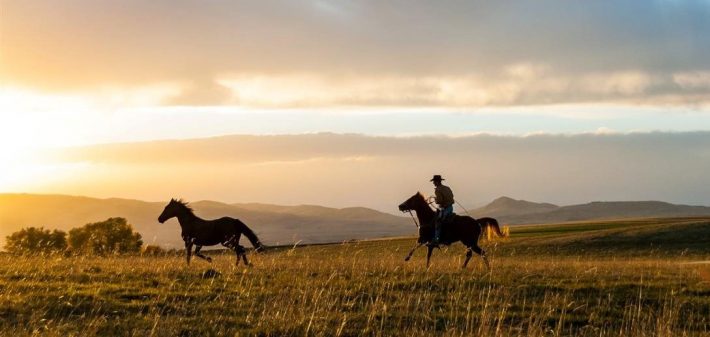
Although two-thirds of Montana’s land consists of rolling grasslands, the state of Montana is home to more than 25 significant mountain ranges.
Rising to 12,693′, Granite Peak is Montana’s highest elevation, and the River Valley of the Kootenai claims the lowest point in Montana at 1,892.’
“Montaña Relucientes,” meaning “shining mountains,” is the Spanish term from which we get the name “Montana.”
Montana Geography
Regardless of your geographic position in the State, Montana land experiences wet-dry and hot-cold extremes, and although the State has an abundance of lakes, rivers and streams, it is not immune to extreme dry periods, which effect Montana’s land, known for its rich agricultural and ranching history.
Not to be outdone in the category of extremes, summer temperatures in Montana have reached beyond 115ºF (46ºC) and winter temperatures have plummeted to –70ºF (-56ºC).